It's time to kill them off.
Myth 1: It's just a video game
This one comes from people who haven't been inside a modern simulator in the last five years. Yes, early tech was rough. The graphics were dated, the feedback was limited, and you could argue it had more in common with a screen than a golf course.
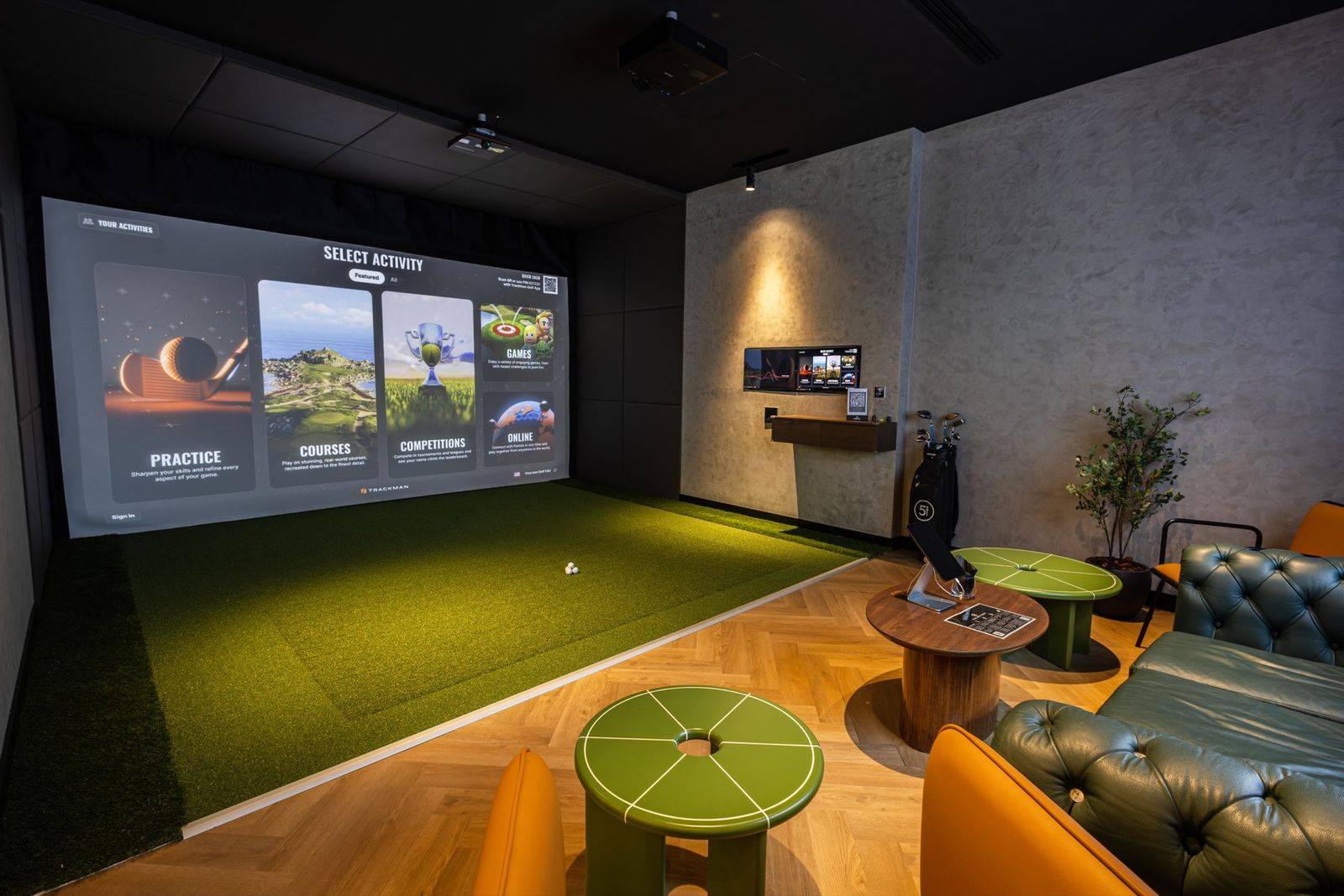
That's not what we're talking about anymore. Today's systems track more than 35 parameters including ball speed, spin rate, club path, and face angle to within 1 to 2% accuracy. That's accurate enough that PGA Tour players, college programs, and elite instructors use these machines daily. When tour pros are using Trackman indoors every week, it's not because they want to play a video game. It's because they want data.
Myth 2: Practice doesn't transfer to the real course
This one gets repeated constantly. Research consistently shows simulator training improves swing mechanics faster than range practice alone. The feedback loop is tighter, the data is immediate, and adjustments happen in real time. You can replay the same shot 30 times to test a change. You can see exactly what your face angle did at impact. You can track a specific miss across a whole session.
A range session gives you ball flight. A simulator session gives you answers.
The tool works. Most people just use it wrong. Using a simulator to play famous courses is entertainment. Using it to identify a pattern, work on a specific fix, and verify the change is training. The distinction matters.
Myth 3: It's not real golf
This is the snobbery one. The idea that unless you're standing on grass, it doesn't count. It's usually said by people who haven't had a serious conversation about what actually improves a golf game.
If your swing improves, your distance control tightens, and your decision making sharpens, those things show up on the course. Irrelevant of where you trained. The game is a ball, a club, and a target. The grass doesn't care about your preparation.
Indoor golf isn't replacing the game. It's making people better at it.
The technology is there. The evidence is there. The players using it speak for themselves.
If you're still treating indoor golf as a rainy day backup plan, the question worth asking is what exactly you're waiting for.